A Rebirth of Belonging
Paul Burgess, senior pastor of University Baptist Church in Chapel Hill, leads his ministry with authenticity, humor and an unwavering commitment to inclusion. A UNC-Chapel Hill alumnus, Burgess draws on his own faith journey to create a welcoming space for students and community members who may have felt excluded by religion in the past. Through preaching, prayer and everyday moments with his family, Burgess seeks to live out a faith rooted in love, vulnerability and shared humanity.
The full profile story can be found here.
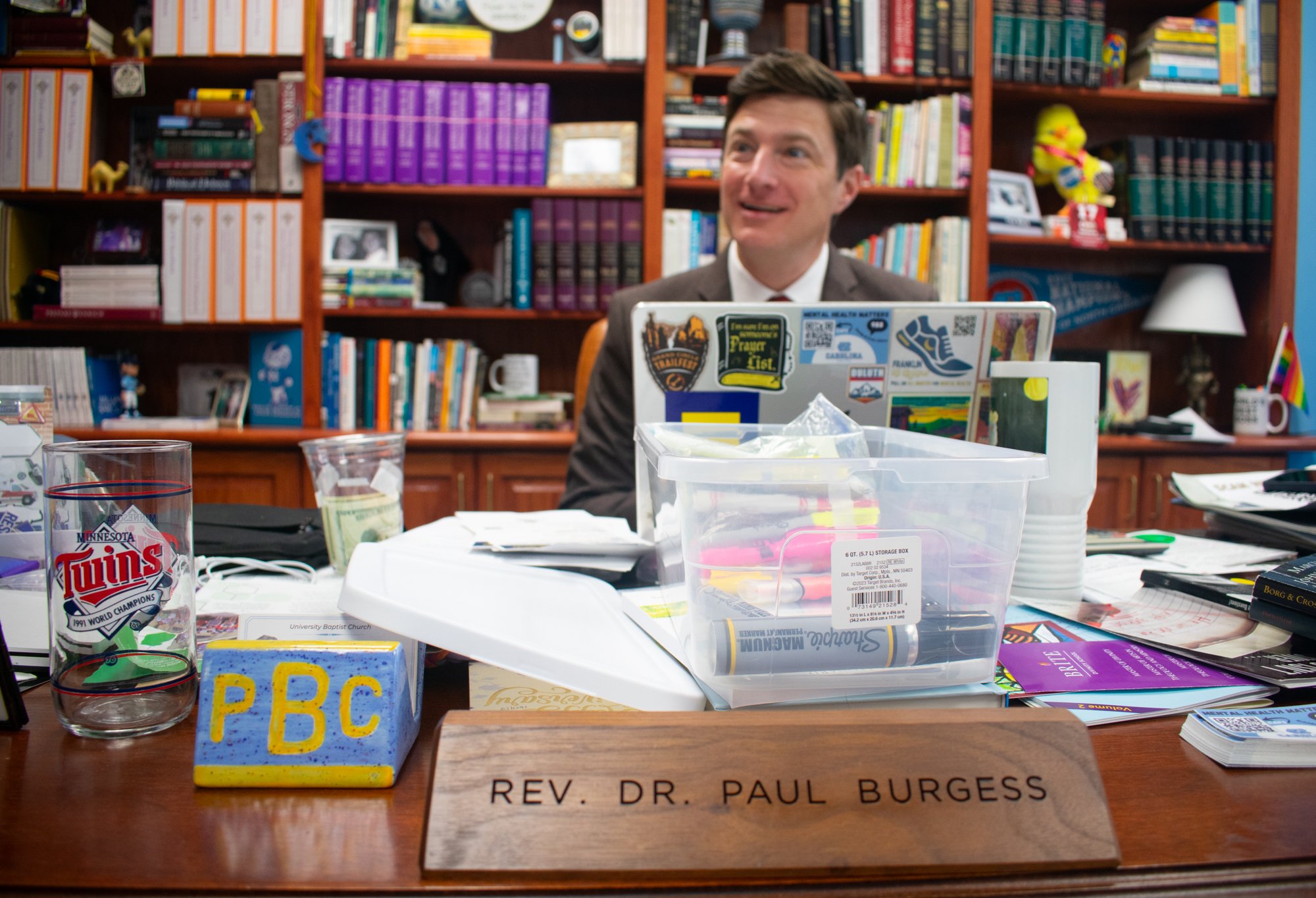
Paul Burgess is the senior pastor at University Baptist Church (UBC) in Chapel Hill, North Carolina. He studied Spanish and interpersonal communications at the University of North Carolina Chapel Hill before earning his master’s degree from Campbell University’s Divinity School in 2011. In 2019, he got his Doctor of Ministry from Campbell. He has pastored at three churches in his career. Burgess said his job enables him to serve students and the public, offering a welcoming environment for those who have felt unwelcomed elsewhere. As a UNC-Chapel Hill alumni, Burgess said he can relate to current students and strives to offer them faith insights that he may have needed at that age. Burgess sits at his desk before the sermon begins. He said he has always felt called towards church ministry. “I’d always felt a tug toward ministry,” Burgess said. “Ever since I was about 20, which I now realize is half my life, I felt comfortable in the church arena.” He began preaching at UBC in 2022. He said the church has allowed him to be his most authentic self and thrive.
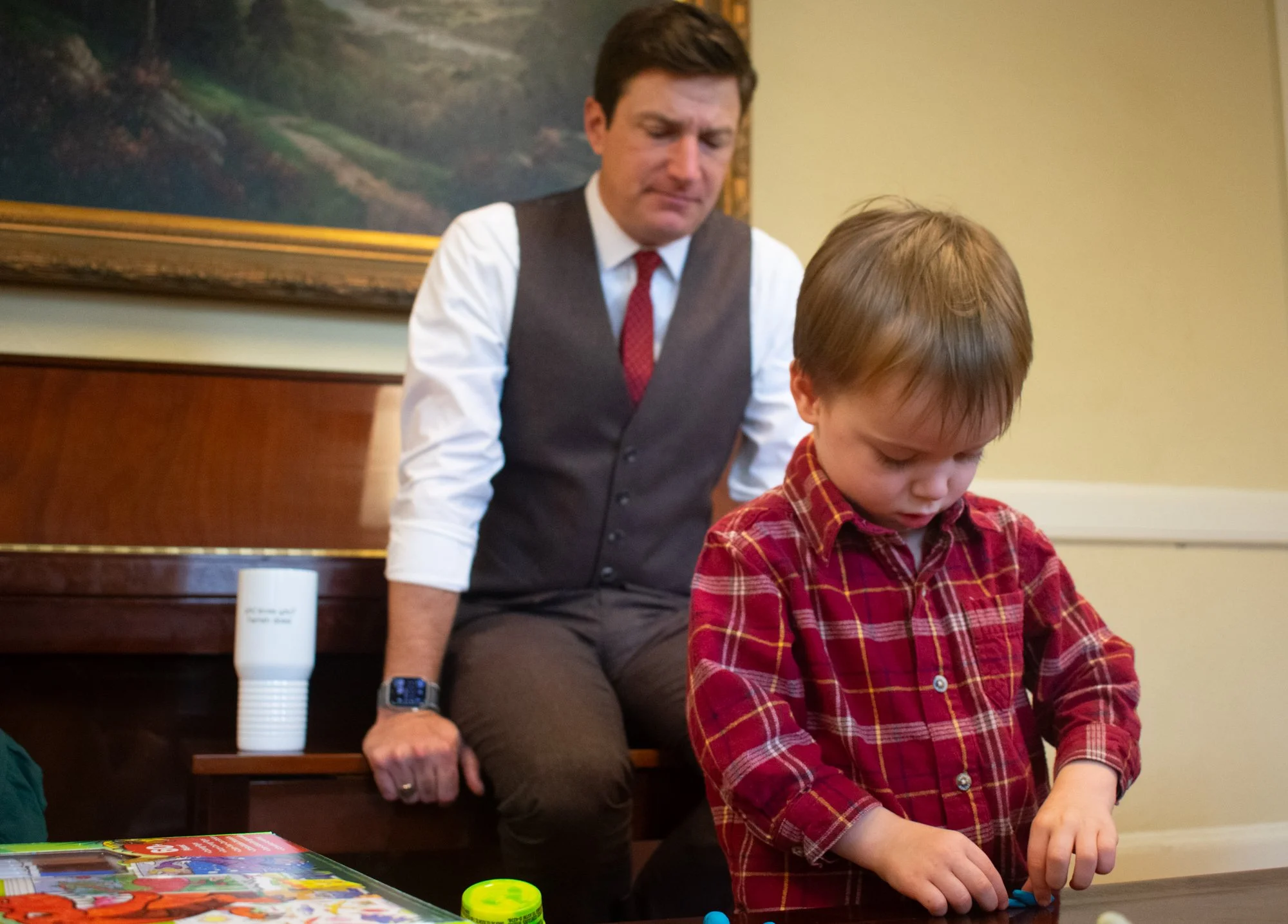
Burgess prays with a child from Bible study before the sermon begins. “Religion is the lens through which I think about everything,” he said. He values faith because it gives him discipline by tethering himself to the person and example of Jesus. He said he becomes more amazed at the person of Jesus every day. Burgess has obsessive-compulsive disorder, which causes him to constantly meditate on Jesus’ teachings and imagine his response. “It’s not like I imagine Him with me as a task master or scary, authoritarian teacher or anything like that,” he said. “It’s more like a gentle presence, reminding me in every situation of the more loving, life-giving route I could take. And more often than not, I choose that route, because I’ve experienced that it leads to better, fuller things than following impulses that aren’t present in the Way of Jesus, like fear, revenge and anxiety.”
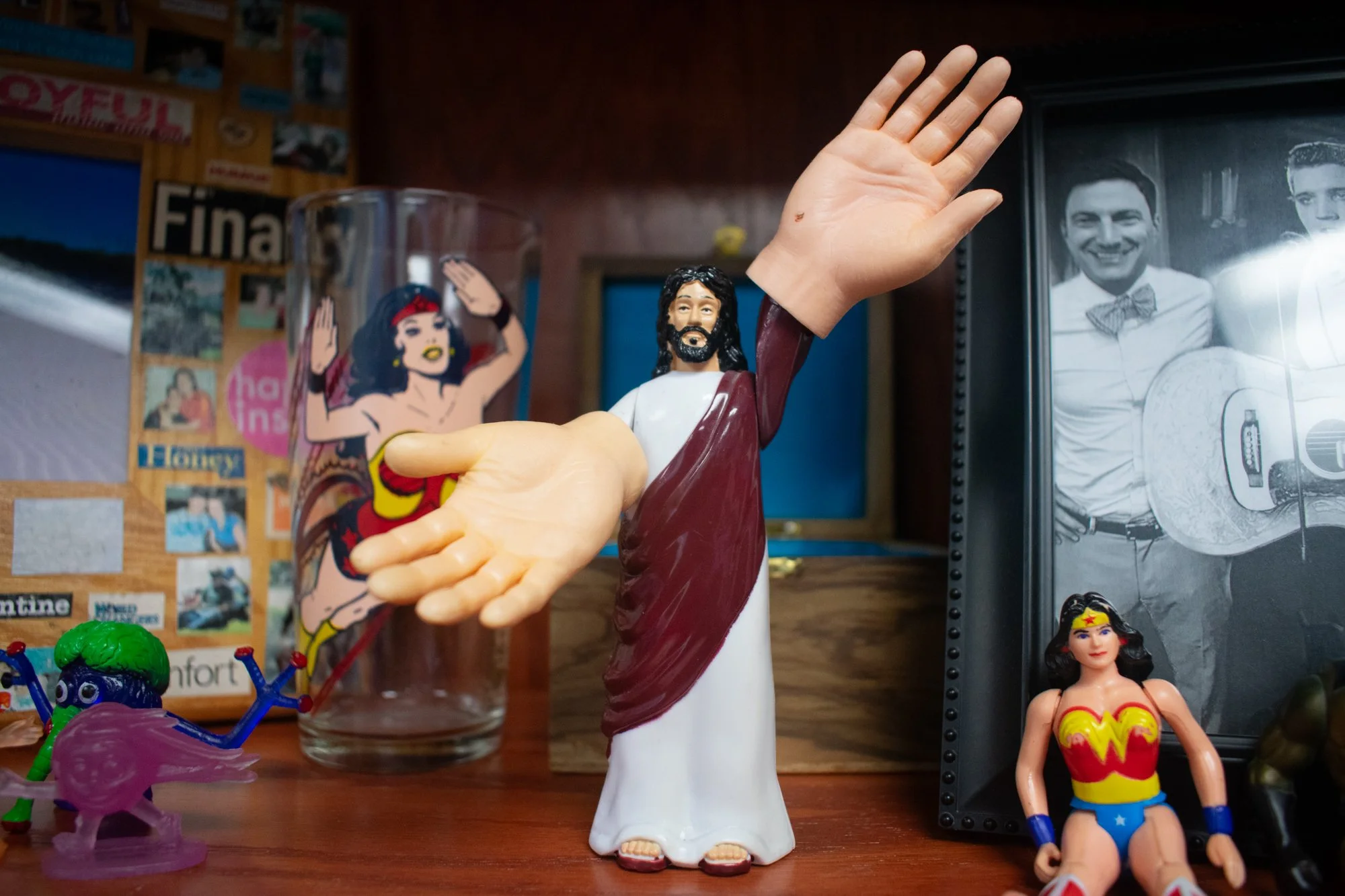
The Jesus action figure was a gift from his sister, and he said it demonstrates a sense of humor that reflects the way he tries to engage with life. Burgess said it shows that while faith is serious, it can get a “little silly” when it falls into human hands due to certain faults of institutionalized religion. He added the finger puppets because it looked fun but also because it shows how Jesus’ hands are big enough to help everyone. “Jesus’ ‘hands’ are probably a lot bigger than we often consider,” he said. “We think He only holds, hugs and helps people like us, but his hands are really big enough that there’s space for everyone.” Burgess has been collecting action figures and souvenirs his whole life, and they are scattered around his office. He said everything in his office has meaning.
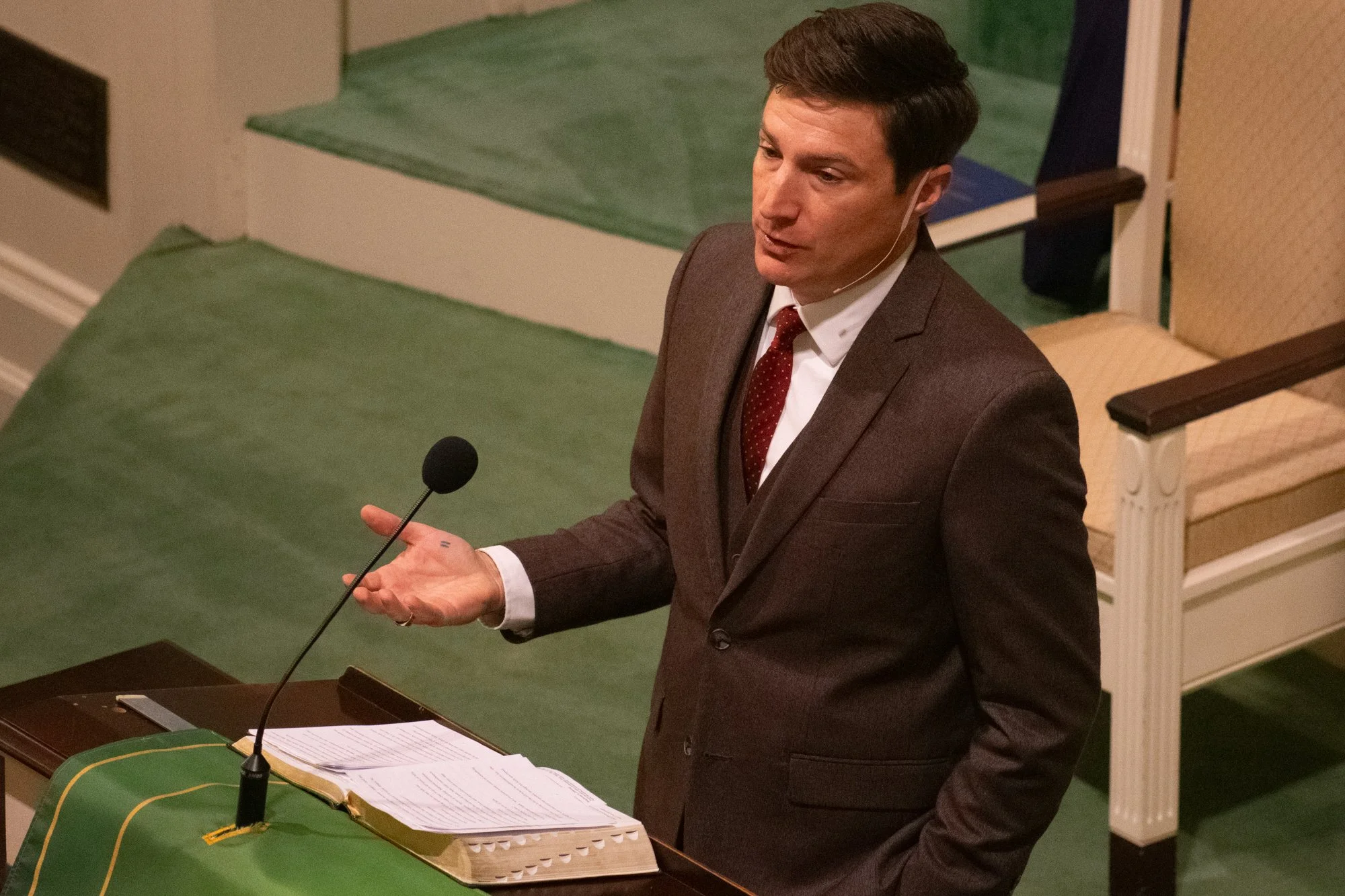
Burgess gives his sermon on Sunday, Oct. 6. He said he usually puts eight to 10 hours into each sermon, which he writes over the course of the week. While some pastors write their sermons well in advance, he prefers to see how he is feeling that week. He tries to incorporate humor into his sermons and draws inspiration from current events, tailoring his messages to relevant issues. “My standard is, I look out ahead of time and say, ‘Okay I think this will be the scripture for this week,’ and then when we get closer to the date, I start to flesh it out a little bit more,” Burgess said. He said his sermon style bounces around stylistically from week to week and that creativity, unpredictability, vulnerability and authenticity are important to him when he preaches. “I think it’s important for people to see a real person in the pulpit, not some pious, polished facade that is removed from actual life and the actual questions and struggles people have,” he said.
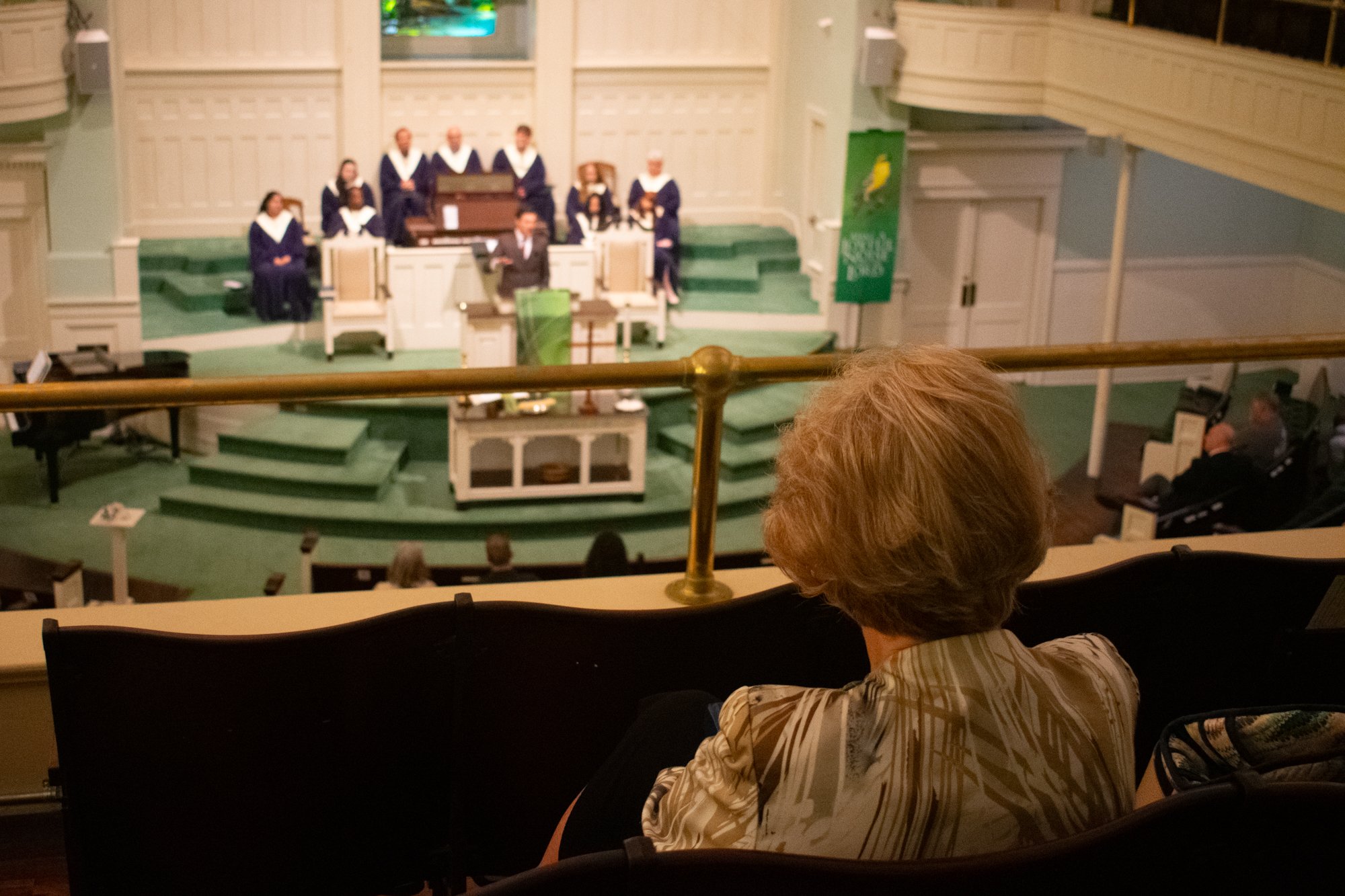
A University Baptist Church member listens to Burgess preach. He said religion does all sorts of things for people, as it can be helpful and hopeful but also hurtful. “One of the things that concerns me most right now is how people—particularly politicians—use religion as a means to amass power,” he said. “Christian nationalism is one of the most concerning threats our country faces. It gives people a cover to nurse their worst instincts because they can hold a cross while they spread lies and attack democracy.” Religion has also burned people in the past. Burgess said he thinks about the many marginalized people who want nothing to do with the church because of how poorly Christians treated them. He said he strives to include everyone, and that LGBTQ+ inclusion is also very important to him. “I’m not going to be able to be my authentic self if I can’t just say, ‘Whoever you are, if you want to seek God together, then you are welcome,” he said.
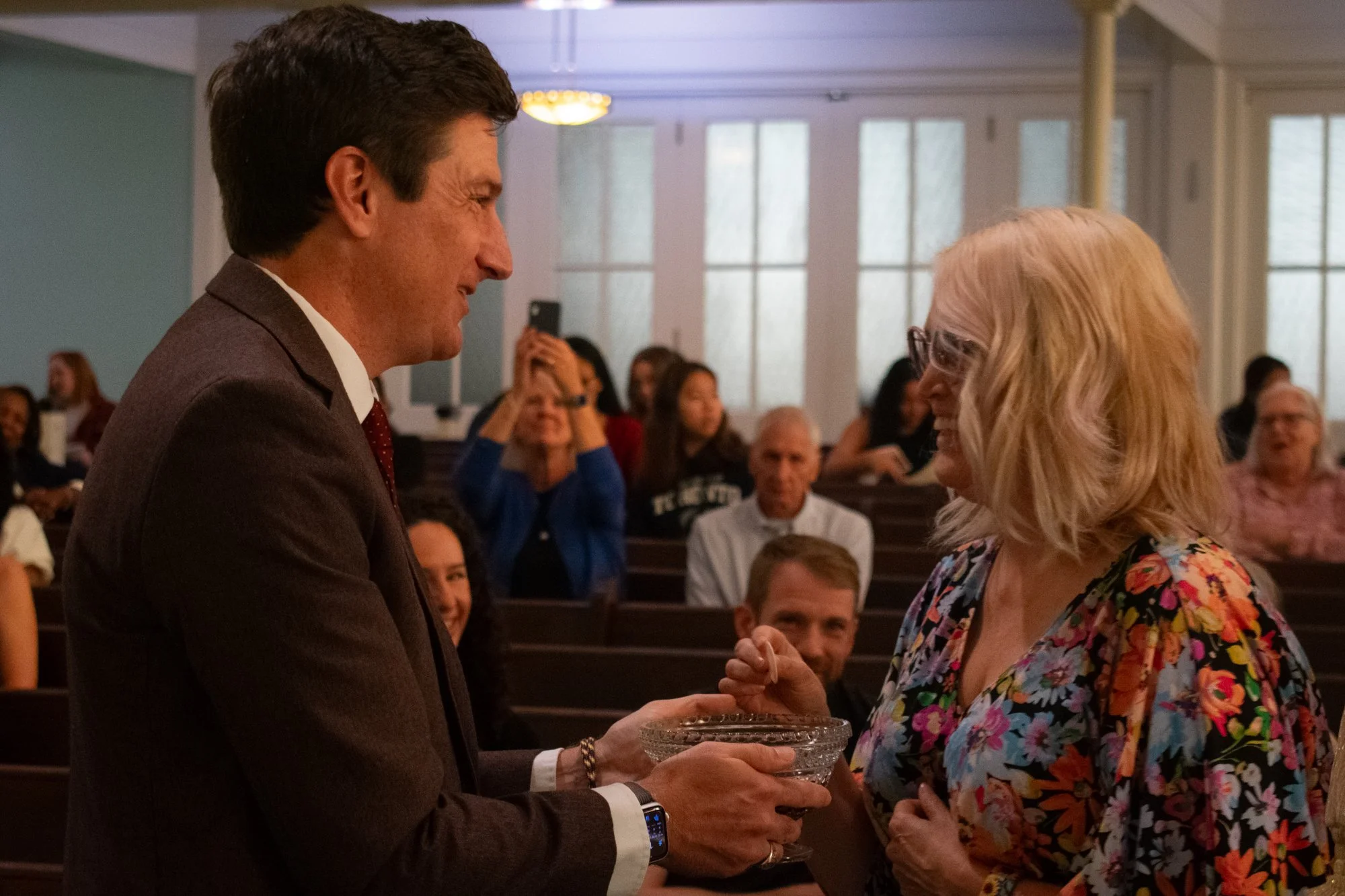
Burgess celebrates World Communion Sunday with a UBC member by serving bread and wine to remember Jesus’ sacrifice during the service. The bread represents Jesus’ body, and the wine his blood. “When we do that as people trying to live in His name and His example, we remember Him and honor Him and come together,” he said. “I feel like we’re so quick to dehumanize other people based on our differences these days, and that’s antithetical to the spirit of communion.” Burgess said communion is one of the most beautiful things the church can do because it forces people to confess that they need something outside of themselves to thrive, which helps people come together. “I love that Jesus chose that because if we can all come together, even from different places, then that’s starting us off on pretty good ground for talking to each other and listening and hearing one another,” he said.

Burgess unloads the dishwasher at his home after returning from coaching soccer practice for Parrish. Burgess said he strives to be a real person each day rather than trying to be Jesus. “I don’t try to be Jesus, but I try to be the best version of myself, and I think adopting the habits and behaviors of Jesus leads me to that person,” he said. “I prioritize things like love above all, listening, patience, gentleness, kindness and peacemaking. I never get it all right, of course. But I can say for certain that I’ve found a better life than I would have had if I didn’t navigate my life this way.”
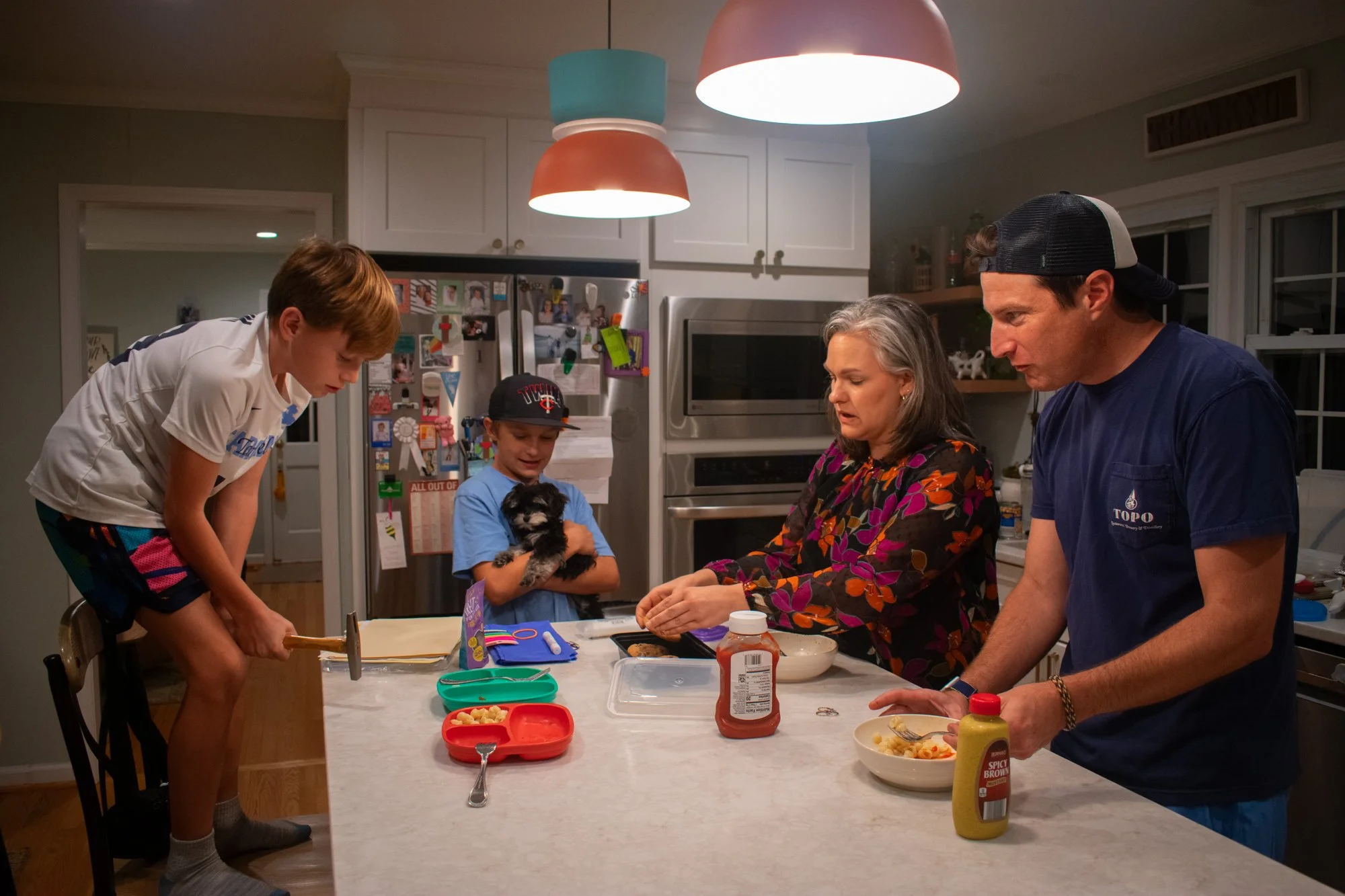
Burgess eats dinner with his wife Liza, his two sons Sawyer and Parrish and their new puppy, Opal. He said he weaves faith into his family and the lives of his children by exposing them to regular church involvement, praying together and often talking about Jesus. “For instance, when faced with frustration or difficult choices, we talk about how Jesus’ example can help us find a good and loving response,” he said. “Our style for this isn’t rigid, but more fluid and in the moment. We could probably stand to have a little more structure to it, but it works well for us.” He said his family means everything to him and that their health and well-being are his top priority in life. He is always mindful to never be more attentive to the church or work than he is to his family. “I try to hold firm boundaries that demonstrate to our family that they're the priority,” he said. “Unless it’s an emergency, I do almost no church-related tasks on Fridays and Saturdays. These are sacred days for me in that way.”